
Pet Stain & Urine Removal
in Aylesbury That Eliminates
Stains and Odours for Good
Enzyme-based treatment that breaks down pet urine, vomit, and organic stains at the molecular level — removing visible marks and neutralising odours permanently. Safe for your pets, your family, and your carpets.
12+ Years
Pet stain expertise
Fully Insured
Complete protection
NCCA Qualified
National accreditation
Pet Safe
Non-toxic treatments
Same-Week
Availability
What Is Professional Pet Stain Removal?
Pet stain removal is a targeted cleaning service that goes far beyond what household products can achieve. When pets have accidents on carpets, rugs, or upholstery, the liquid does not stay on the surface — it soaks into the fibres, penetrates the backing, and often reaches the underlay or padding beneath.
Standard carpet cleaners and shop-bought pet stain sprays address only the visible surface mark. They cannot reach the contamination that has soaked deeper. This is why the stain keeps reappearing, why the smell returns on warm or humid days, and why your pet may return to the same spot repeatedly.
Our professional pet stain treatment uses enzyme-based solutions that break down uric acid crystals, proteins, and organic compounds at a molecular level. Combined with hot water extraction, this removes both the visible stain and the invisible contamination causing the odour.
This service is for pet owners across Aylesbury, High Wycombe, and Buckinghamshire dealing with urine stains, vomit marks, or persistent pet-related odours in their carpets, rugs, or furniture. Whether it is a single accident or months of accumulated contamination, we have the tools and expertise to resolve it.
Pet Stain Removal Results
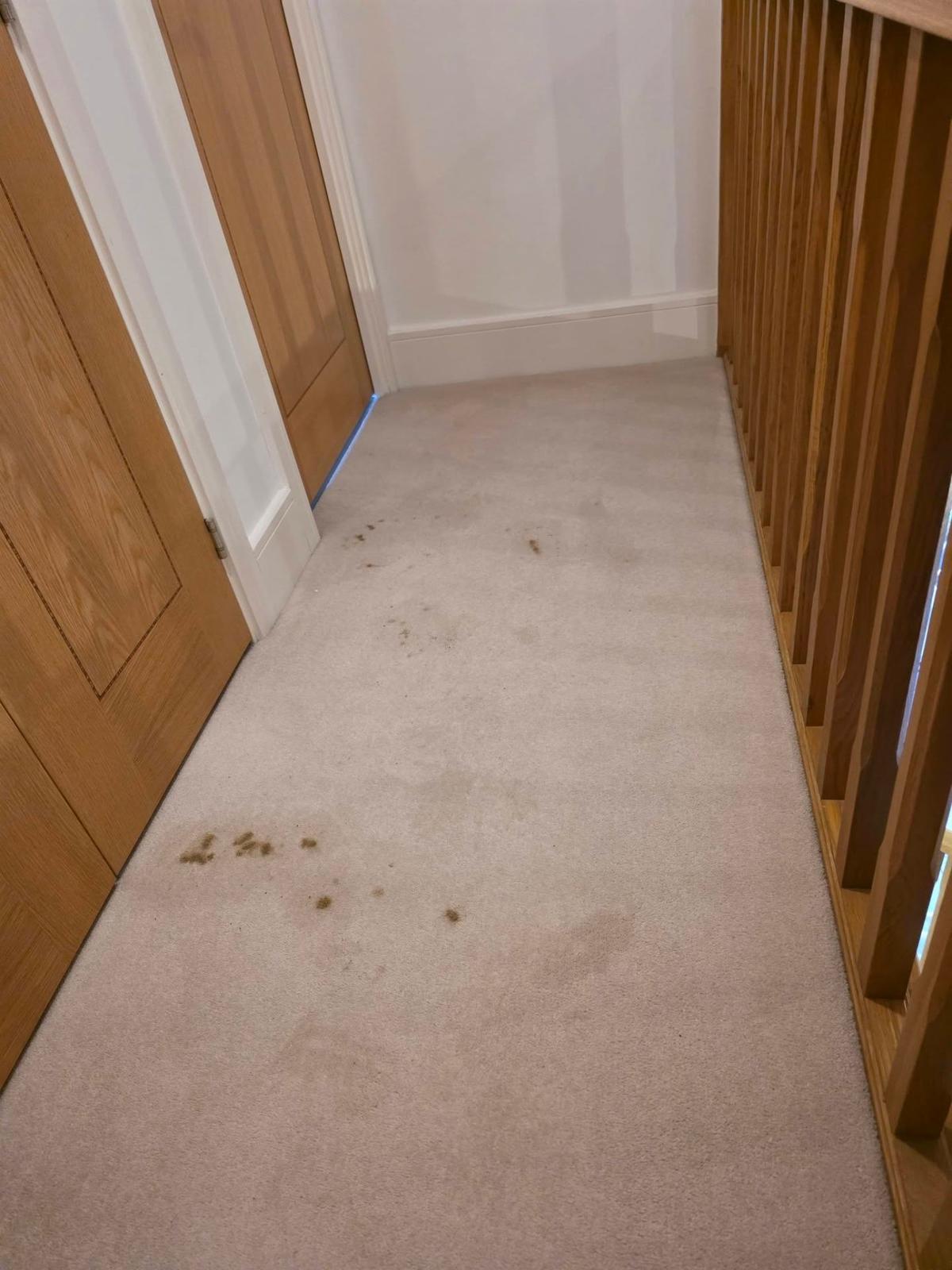
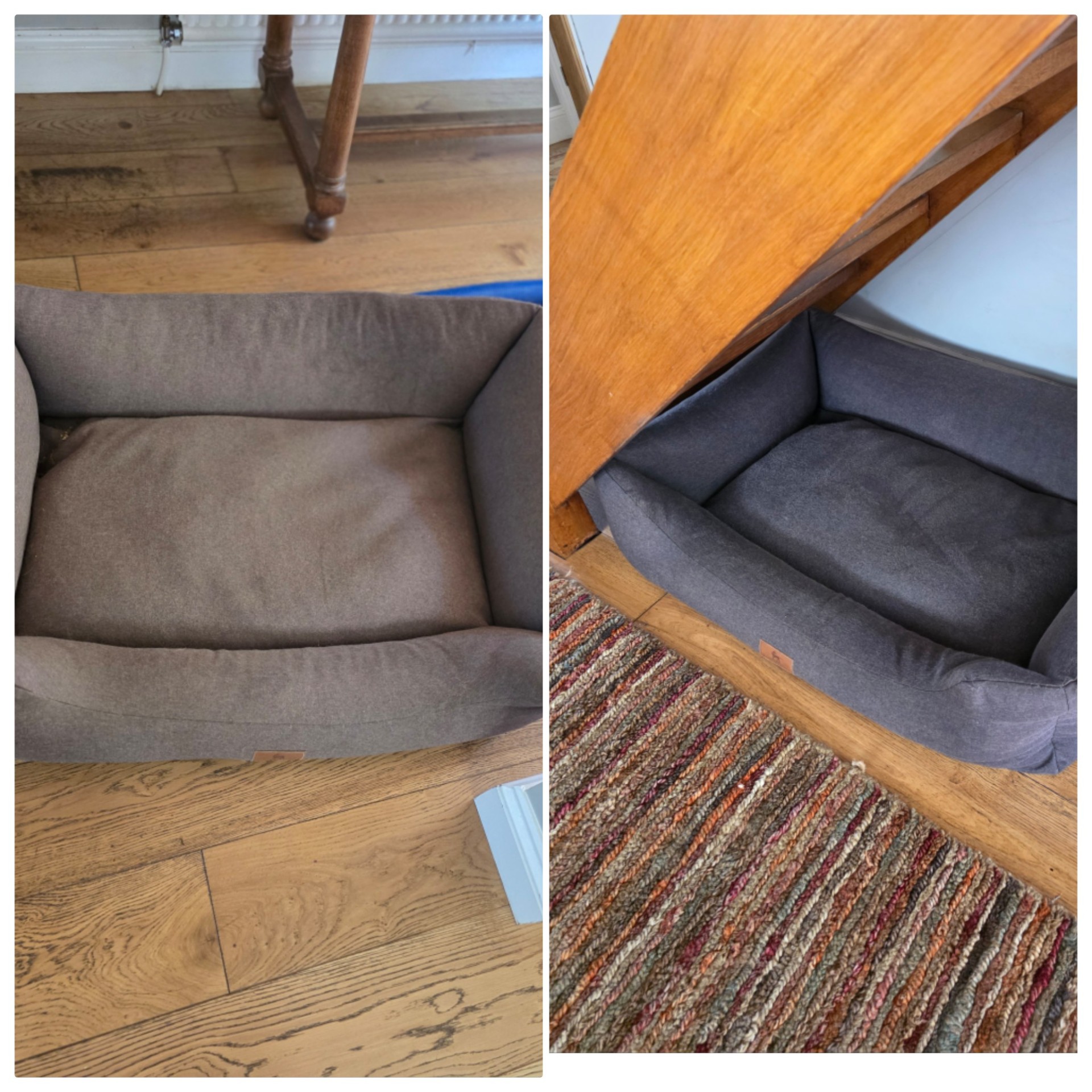
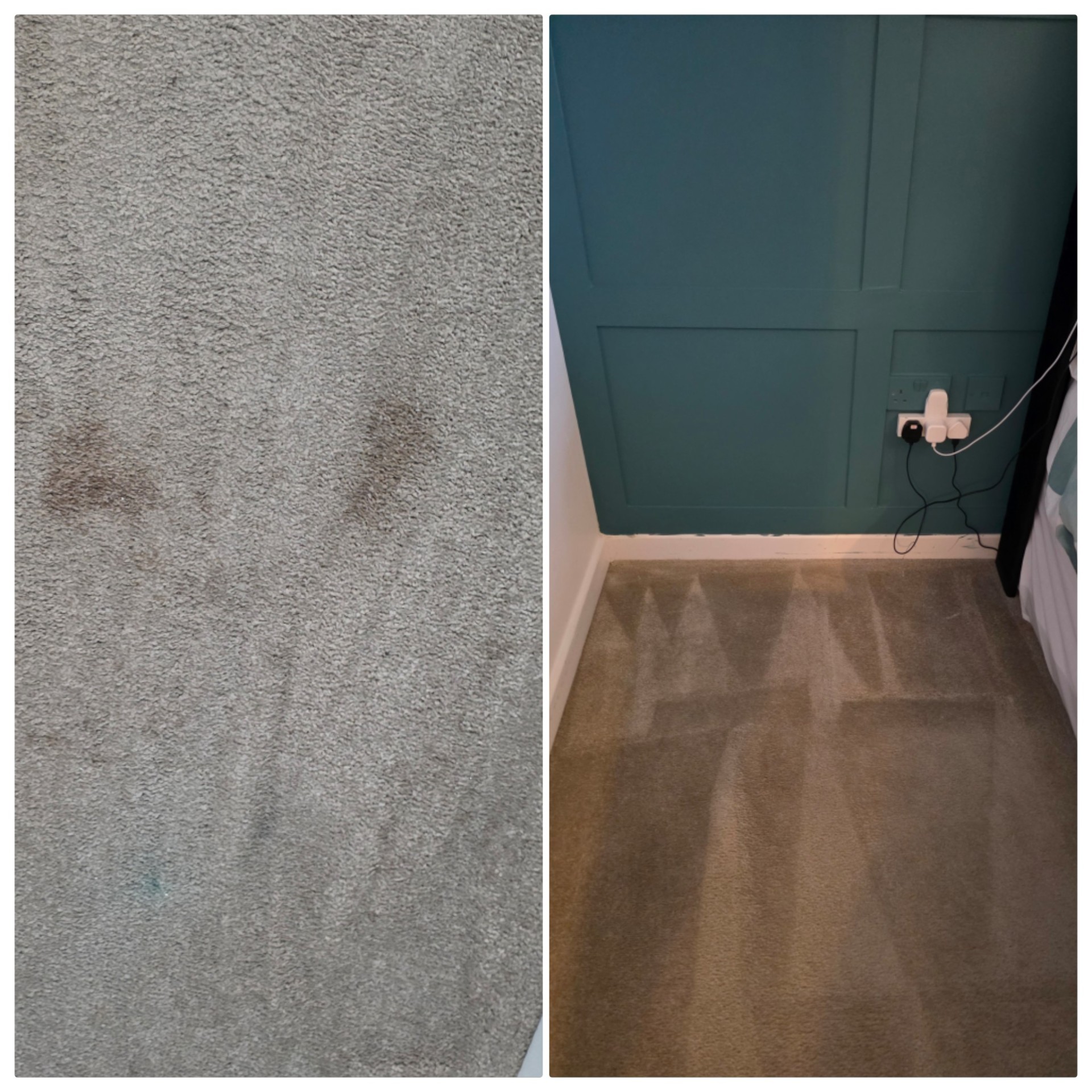
These images show real pet stain contamination treated in homes across Buckinghamshire. From hallway accidents to severe carpet soiling — our enzyme-based treatment eliminates both the stain and the odour.
Every pet stain is assessed with UV detection to ensure no contaminated area is missed during treatment.
Why DIY Pet Stain Products Fail
When your pet has an accident on the carpet, your instinct is to grab a cloth and a bottle of stain remover. This helps with the surface moisture but does nothing about the urine that has already soaked into the carpet backing and underlay. The visible stain may disappear, but the contamination remains underneath.
Pet urine contains urea, urobilin, creatinine, and uric acid. The first three wash away relatively easily with water. Uric acid does not. It crystallises as it dries and bonds tightly to carpet fibres. These crystals are insoluble in water and resistant to most household cleaning products. They reactivate with humidity — which is why the smell returns unpredictably.
Many shop-bought pet stain products use oxidising agents or fragrances that mask the smell temporarily. Some actually set the stain further by altering the chemistry of the dye bond. Others leave a sticky residue that attracts more dirt to the area, creating a darkened patch that looks worse than before.
Pets have a far more sensitive sense of smell than humans. Even when you can no longer detect the urine odour, your pet can — and will be drawn back to the same spot. This creates a cycle of repeated accidents in the same area unless the contamination is fully removed at the molecular level.
The longer pet stains remain untreated, the more damage they cause. Urine can bleach carpet dyes, weaken fibre bonds, and delaminate carpet backing from the underlay. In severe cases, the underlay itself becomes saturated and begins to break down, creating a problem that cannot be resolved without replacement.
Our Pet Stain Removal Process
UV Detection & Mapping
We use UV light to identify all contaminated areas — many of which are invisible to the naked eye. This ensures no stain is missed, especially in areas where your pet may have had accidents you were not aware of.
Enzyme Pre-Treatment
Affected areas are saturated with enzyme solutions that begin breaking down uric acid crystals, proteins, and organic matter. These solutions need dwell time to work, so they are applied first and allowed to penetrate before extraction.
Agitation & Penetration
We work the enzyme solution into the carpet fibres and backing to ensure it reaches the full depth of contamination. For severe stains, we may inject solution beneath the carpet surface.
Hot Water Extraction
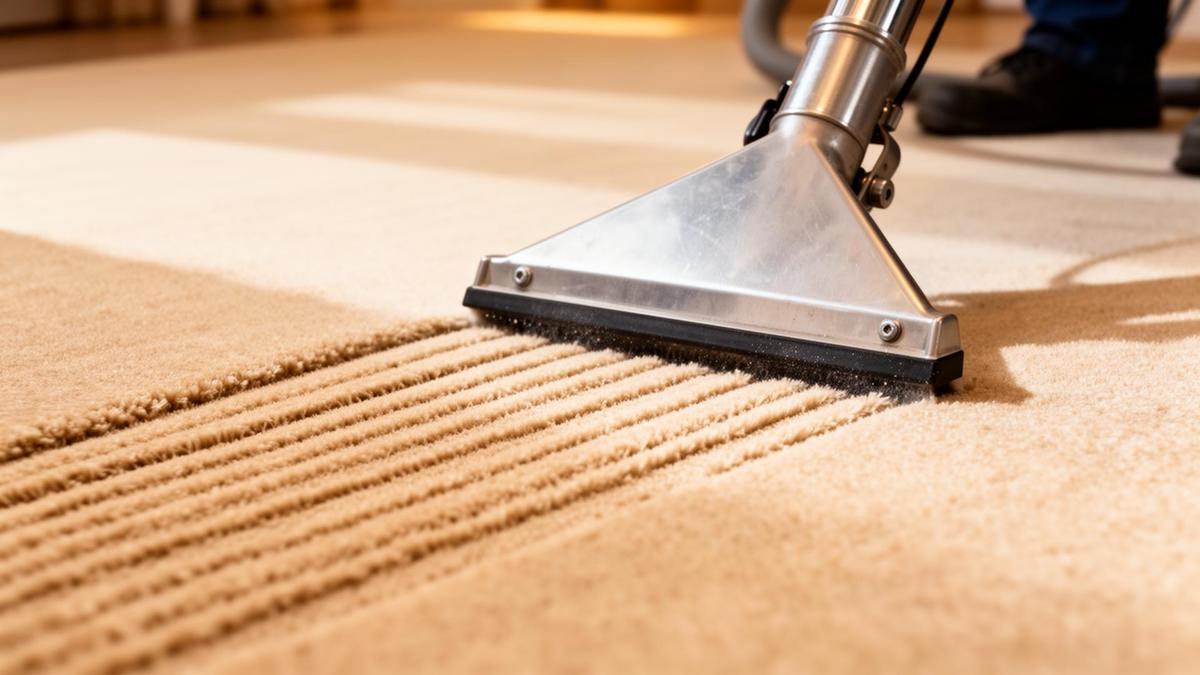
Using professional extraction equipment, we flush and extract the dissolved contamination along with dirt, bacteria, and cleaning solution. This leaves the carpet clean, residue-free, and significantly drier than DIY methods.
Deodorisation & Protection
A final deodorising treatment is applied that continues working for 24–48 hours. If requested, we apply stain guard to protect against future accidents.
Why Professional Pet Stain Treatment Works
Targets the Root Cause
Enzyme solutions break down uric acid crystals that water and household products cannot dissolve — eliminating the stain and the smell at source.
UV Detection
We find contamination you cannot see. UV mapping ensures every affected area is treated, preventing recurring odours from missed spots.
Breaks the Cycle
Complete removal of urine scent prevents pets from returning to the same spot — ending the cycle of repeated accidents.
Safe for Pets & Children
Enzyme treatments are non-toxic, biodegradable, and safe for all household members once dry.
Saves Your Carpet
Early professional treatment can prevent permanent dye damage, fibre degradation, and backing delamination — saving you the cost of carpet replacement.
Combined Cleaning
Pet stain treatment works best alongside a full carpet clean — addressing both localised contamination and general soiling in one visit.
Pet Stain Types, Severity Levels & Treatment Approaches
Dog urine stains are the most common pet contamination we treat. Dogs tend to produce larger volumes than cats, and male dogs in particular may mark multiple areas. The key challenge with dog urine is the volume — large deposits can soak through carpet, backing, underlay, and even reach the subfloor in severe cases.
Cat urine is chemically different from dog urine. It contains higher concentrations of uric acid and a compound called felinine, which gives it its characteristically strong, pungent odour. Cat urine stains are often smaller but more concentrated, and the odour is more persistent. We use feline-specific enzyme formulations for these stains.
Puppy and kitten training accidents are extremely common and usually result in multiple small stains across a wide area. These are generally fresh and respond well to a single treatment. We recommend having carpets cleaned professionally once training is complete, combined with stain guard application to protect against residual accidents.
Elderly pet accidents present a different challenge. Incontinence in older dogs and cats often results in repeated contamination of the same area over weeks or months. By the time professional help is sought, the underlay is frequently saturated. We assess the depth of penetration and advise whether underlay replacement is necessary alongside our treatment.
Vomit stains from pets contain stomach acids and bile that can bleach carpet dyes if left untreated. Fresh vomit should be removed immediately by scraping (not rubbing) and blotting. Our enzyme treatment then neutralises the acid and removes the staining. Older vomit stains may have permanent dye changes, but the organic contamination and odour can still be fully treated.
Faecal stains are treated with antibacterial solutions followed by enzyme treatment and extraction. These stains carry bacterial contamination that requires thorough sanitisation, particularly in households with young children who play on the floor.
For severe or widespread contamination, we may recommend a two-visit approach: an initial treatment to break down the contamination, followed by a second visit for extraction and final cleaning. This ensures the enzyme solutions have sufficient dwell time to work through heavy deposits.
After treatment, we strongly recommend stain guard application. This creates a protective barrier on carpet fibres that causes liquids to bead on the surface rather than absorbing. For pet owners, this provides critical extra time to blot up accidents before they soak in — significantly reducing the risk of permanent staining.
Frequently Asked Questions
Related Services
Ready to Get Started?
Request your free, no-obligation quote today. We respond quickly and never charge hidden fees.